

Classification of speakers
The following content is from Wang Yizhen's "Speaker User Manual". Today We will take everyone to understand the classification of the speakers.
1:Divided into reversible transducers and irreversible transducers
Reversible transducer of energy reversible transformation, including: electric transducer; electromagnetic transducer; magnetostrictive transducer; electrostatic transducer; piezoelectric transducer; electro-distortion transducer .
An irreversible transducer whose energy cannot be reversibly converted, including: an impedance transducer; a hot wire transducer.
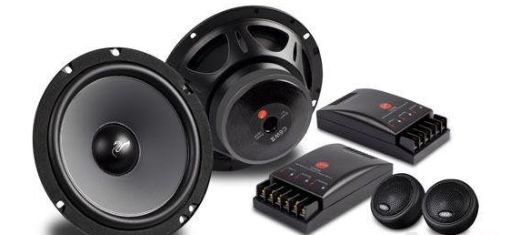
Classification of speakers
The following content is from Wang Yizhen's "Speaker User Manual". Today We will take everyone to understand the classification of the speakers.
1:Divided into reversible transducers and irreversible transducers
Reversible transducer of energy reversible transformation, including: electric transducer; electromagnetic transducer; magnetostrictive transducer; electrostatic transducer; piezoelectric transducer; electro-distortion transducer .
An irreversible transducer whose energy cannot be reversibly converted, including: an impedance transducer; a hot wire transducer.
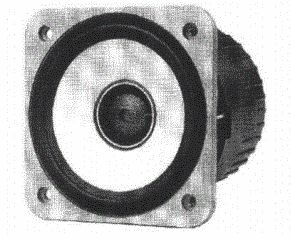
The most widely used cone speakers and horn loudspeakers are all electric speakers. We will focus on this type of speaker, and discuss its principles, performance, structure, features, and component performance in depth.
B:Electromagnetic speaker
Also known as "reed speaker." An electromagnet having a movable iron core between the two poles of the permanent magnet. When there is no current in the coil of the electromagnet, the movable iron core is attracted by the equal attraction of the two magnetic poles of the permanent magnet, and remains stationary at the center; when a current flows in the coil, The movable iron core is magnetized to become a single magnet. As the direction of the current changes, the polarity of the strip magnet changes accordingly, making it possible for the core to make a rotational motion around the fulcrum. The vibration of the movable iron core is transmitted from the cantilever to the diaphragm to push the air to vibrate.
However, this electromagnetic speaker has a narrow frequency band, large distortion, and poor sound quality, and is rarely used except for some special occasions.
C:Electrostatic speaker
The electrostatic speaker is a speaker that operates by using an electrostatic force applied to a capacitor, that is, a capacitor, and is also referred to as a "capacitor speaker" because the positive and negative electrodes face each other in a capacitor shape. As shown in the figure below, there are two thick and hard materials as the fixed plates, the holes on the plates can transmit sound, and the middle plates are made of thin and light materials. The diaphragm is fixed and tensioned to maintain a considerable distance from the fixed pole, and even at a large amplitude, it does not collide with the fixed pole. This feature makes electrostatic speakers unsuitable for use with low frequency speakers. Usually its effective frequency range is 100Hz-20kHz, the structure of the electrostatic speaker is not complicated, and the diaphragm is driven by the same phase driving force, so after the electric speaker, it is called high fidelity speaker application. In recent years, the development of polymer chemistry can use a very thin polymer film as a diaphragm. The electron has been successfully developed, and an electrostatic speaker that does not require a bias voltage, that is, an electron electrostatic speaker, has been proposed.
The advantage of static static speaker is that the whole diaphragm vibrates in phase, the diaphragm is light, the distortion is small, and the sound is very crisp. It is a very unique sound with good resolution, clear details and realistic sound. Quite a group of fans. Its shortcoming is low efficiency, high-voltage DC power supply, easy to vacuum, and increased distortion of the diaphragm. It is not suitable for listening to rock and heavy metal music, and the price is relatively expensive.
D:Piezoelectric speaker
A speaker that operates using the inverse piezoelectric effect of a piezoelectric material is called a piezoelectric speaker. The phenomenon that the dielectric is polarized under pressure to cause a potential difference between the two ends of the surface is called a "piezoelectric effect." Piezoelectric speakers are divided into piezoelectric high-polymer speakers, piezoelectric crystal speakers, and piezoelectric ceramic speakers depending on the medium. The figure below shows a piezoelectric crystal speaker.
Compared with an electric speaker, a piezoelectric speaker does not require a magnetic circuit, and does not require a bias voltage compared with an electrostatic speaker. The structure is simple and inexpensive, but the disadvantages are not small, the distortion is large, and the operation is unstable.
E:Ion speaker
In general, the molecules in the air are neutral and uncharged. However, after high-voltage discharge, it becomes charged particles, and this phenomenon is called dissociation. By using the audio voltage to vibrate the free air, sound waves are generated, which is the principle of the ion speaker.
Ion speakers differ from other speakers in that they have no diaphragm, so both transient and high-frequency characteristics are good, but the complexity of the structure limits its wide range of applications.
F:Airflow modulation speaker
Also known as the airflow speaker. It is a speaker that uses compressed air as an energy source to modulate airflow with audio current. Its output power can reach thousands to tens of thousands of sound tiles. The efficiency is about 15%. This type of loudspeaker consists of a plenum, a modulating valve, a horn and a magnetic circuit.
G:Flame speaker
In the past, someone had a whim, whether it was possible to modulate the flame to make a sound, and it was successful. When the flame of air and gas combustion passes through the electrode, the electrode is supplied with a DC voltage and a high frequency signal, and the flame is modulated by the audio signal to sound. The flame has almost no mass and the sound is very dynamic. But he has fatal flaws, is not safe, and is inconvenient, so practical applications are few.
H:Magnetostrictive speaker
This is a special strong magnet that can vibrate under the action of a magnetic field.
3:Classified by purpose
A:Hi-Fi Speaker
It is a speaker that is small in distortion and can really reproduce high sound quality. Although it is used frequently, there is a big difference in its understanding of it.
B:Monitor speaker
A high quality speaker used to evaluate the sound quality of a program. Its performance requirements are very high, should have a wide and flat frequency response, very low harmonic distortion, good pointing characteristics, large power bearing capacity, large dynamic range and high reliability.
C:Sound reinforcement speaker
The loudspeakers are loudspeakers that are used to transmit sound information to a large number of people, a wide range and a long distance. According to the specific application market, it can be divided into theaters, concert halls, and town halls; auditoriums, conferences. For use in rooms and banquet halls; for broadcasting in factories, institutions, supermarkets, and stations; for emergency alarms. According to the content of the loudspeaker, it can be divided into: music; voice; special signal. The speaker for sound reinforcement has different requirements for frequency reproduction range and directivity according to different purposes. However, there are several common requirements: good definition; uniform sound reinforcement; not easy to scream; stable work; good reliability.
D:Musical instrument speaker
The instrument speaker is used in conjunction with electric guitars, electronic phoenix instruments, etc. It is an amplifier and speaker added to amplify the instrument sound. It is required that the speaker of the instrument can withstand high power and reliability.


